
Description
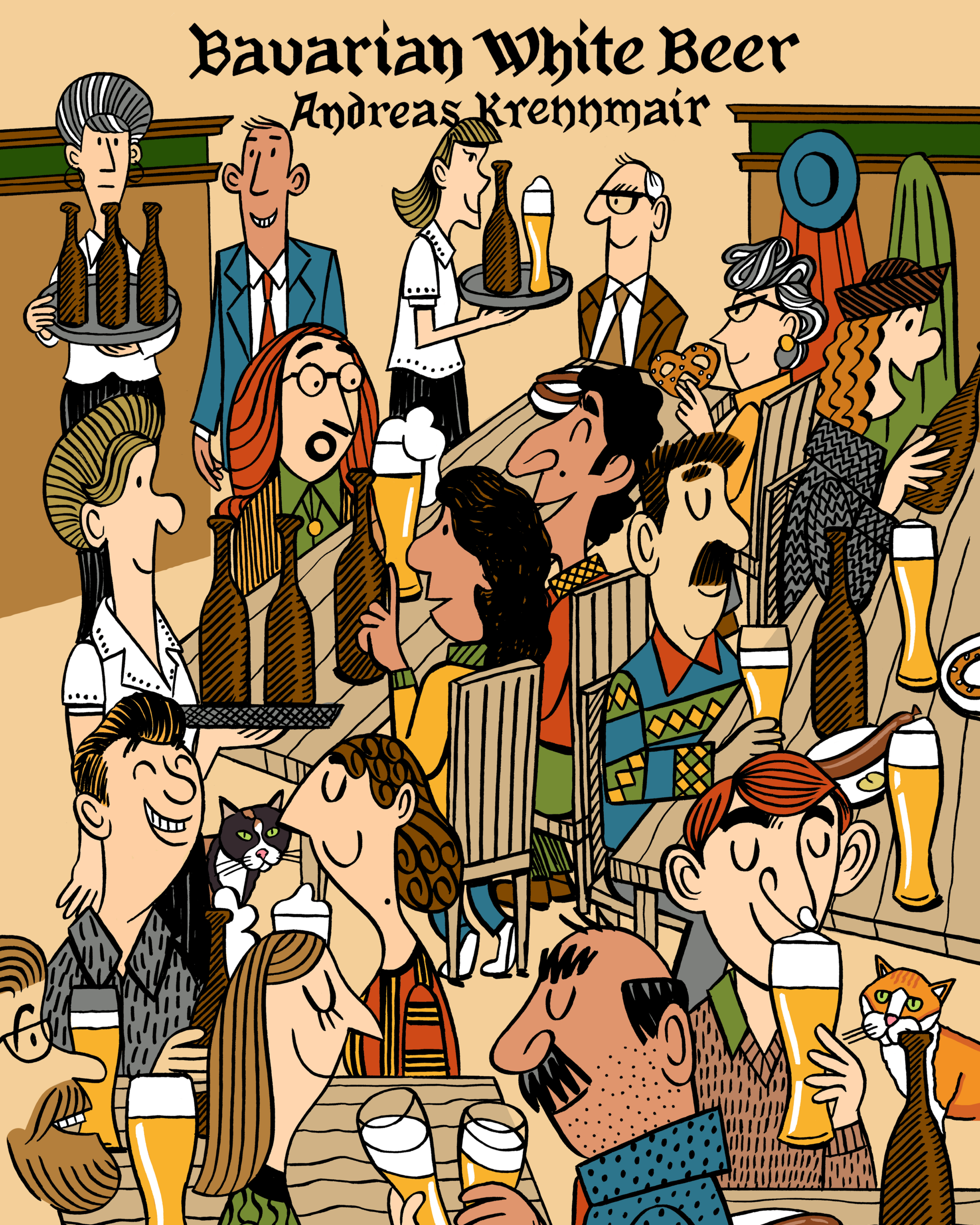
Whether you know it as Weißbier, Weizenbier, or Hefeweizen, Bavarian white beer is an outstanding example of a traditional beer style that survived the industrial lager revolution of the 19th century. Originating from Bohemian brewing traditions, this unique top-fermented beer was so popular in Bavaria that the Bavarian Duke turned brewing it into a strict state monopoly.
With a network of dedicated brewhouses generating massive revenue for the Bavarian court, the style flourished before falling out of fashion in the late eighteenth century. Thanks to a small but loyal group of drinkers and the private brewer Georg Schneider, the style survived as a niche beer until a consumer-driven resurgence in the latter half of the 20th century catapulted it back onto the global stage. Today, it is an internationally recognised classic, celebrated and reinterpreted by modern craft brewers around the world.
This book tells you the story of this iconic beer type and discerns historic sources to explain old brewing methods and ingredients employed for it. It also discusses the latest science and state-of-the-art brewing technologies behind the aromas, flavours and haze of this style. Complete with a selection of homebrew recipes, this guide shows how you can brew classic Hefeweizen, big, bold Weizendoppelbock, and innovative, hop-forward modern interpretations of Bavarian wheat beer at home.
Ordering
You can order this book worldwide exclusively from Amazon, either as paperback or e-book. See the links below.
Printed book:
- Amazon.com
- Amazon Canada
- Amazon UK
- Amazon Germany
- Amazon France
- Amazon Italy
- Amazon Spain
- Amazon Japan
e-book:
- Amazon.com
- Amazon Canada
- Amazon UK
- Amazon Germany
- Amazon France
- Amazon Italy
- Amazon Spain
- Amazon Netherlands
- Amazon Japan
- Amazon India
- Amazon Brazil
- Amazon Mexico
- Amazon Australia
If you are a subscriber to Kindle Unlimited, this book is included for free!
Table of Contents
- Introduction
- What Is Bavarian White Beer?
- The History of White Beer in Bavaria
- Bohemian White Beer
- The House of Degenberg and Their Brewing Rights
- Dukes of Bavaria: The House of Wittelsbach and Their Brewing Ambitions
- The Monopolisation of White Beer in Bavaria
- Bavarian White Beer and the Reinheitsgebot
- White Brewhouses of Bavaria
- Slow Decline, Lease and Sale of the White Brewhouses
- The Era of Georg Schneider: Full Privatisation of White Beer Brewing
- Bavarian White Beer in the 20th and 21st Century
- The Culture of Bavarian White Beer
- Historic White Beer Brewing
- Malting
- Brewing White Barley Beer (1830)
- Brewing White Wheat Beer (1847)
- Mashing Method “Satz Brauen” (1853)
- Fermentation (1853)
- Kelheim Brewing Method (1853)
- Brewing Method at Weißes Hofbräuhaus (1878)
- White Barley Beer From Bavarian Swabia (1878)
- Munich White Wheat Beer (1893)
- Bavarian White Beer (1949)
- Comparison of Historic Brewing Methods
- Bottle Conditioning
- Modern White Beer Brewing
- Malt
- Hops
- Water
- Yeast
- Harvesting Yeast From Bottle-Conditioned Beer
- Bottom-Fermenting Yeast for Bottle-Conditioning
- Aroma, Flavour and Haze
- Brewing Methods
- Decoction Mash
- Infusion Mash
- Herrmann Method
- Fermentation
- Homebrew Recipes
- Home-Malting Wheat
- Historic Kelheim Wheat Beer
- Wheat Beer Fermented in a Burton Union Set
- Triticum Wormatia
- Lord Nelson Hefeweizen
- Eichenrauchweizen
- Skeleton Key & Goldfinger Bavarian Breeze
- Live Oak Brewing Company Primus Weizenbock
- Sapwood Cellars Exaggerated Truth
- Analyses of Beers
- Analysis of Königliches Hofbräuhaus Munich White Beers (1866)
- Analysis of Munich White Beers (1888)
- Bavarian Weizenbock (2014)
- Bavarian Dunkel Hefeweizen (2014)
- Erdinger Beers (2017)
- Bavarian Leicht Hefeweizen (2014)
- Bavarian Kristall Weizen (2014)
- Statistics
- White Beer Breweries in Bavaria 1807/1808
- Beer Production in Bavaria 1859/60-1891
- Beer Production in Bavaria 1872, by Beer Type and Region
- Malt Usage at Weißes Bräuhaus 1856-1874
- Malt Usage in Munich White Beer Breweries 1873-1896
- Units of Measurements in Bavaria