
Back in 2017, I wrote about the demise of hop growing in Upper Austria before World War 2. Essentially, Nazi Germany consolidated its hop growing industry in 1939 and only focused on the existing growing regions in Bavaria and occupied Bohemia, while uprooting (quite literally) small hop growing regions like in Mühlviertel in the north of Upper Austria.
Nowadays, Mühlviertel again grows hops, but not the original hops that they used to grow (I previously wrote about where these hop plants came from). But how did the Mühlviertel hop industry recover?
The question of growing domestic hops first came up in 1946: local growers tried to import hop plants from Bavaria. The Bavarian authorities allowed the export, but the Austrian authorities initially refused the import. Until all bureaucratic issues were resolved, the plants were dry and unsuitable to be planted.
In 1947, Upper Austrian growers tried to import hop plants from Czechoslovakia instead. This attempt failed because “an occupational power” (very mysterious, the article isn’t more specific) refused to give permission for the import, and Czechoslovakian hop suppliers didn’t want to sell their plants in the first place for fear of competition.
So Upper Austria again looked towards Bavaria and tried to import plants from there. At the time, it was estimated that in Mühlviertel, 500 to 700 tons of hops could be grown, which would cover about a third of the Austrian brewing industry’s demand in hops, and would have saved foreign currency, at the hop price on the international market was at 280 dollars per 100 kg of hops.
It can be assumed that this attempt was not successful, because in 1950, restarting hop growing was approached in a much more structured way: two trial gardens were planted, one with 1,500 plants, another one with 450 plants. The goal was to find the hop varieties that were the most suitable for the conditions in Mühlviertel. In total, eight varieties, four of which were from England, were trialled. According to the BarthHaas report for 1951-1952 (page 12), other trial plants came from Germany and Yugoslavia.
In 1951, the Austrian brewing industry signed a contract with the Mühlviertel hop growers that guaranteed a purchase of 50 tons of hops annually for 15 years. In the same year, hop growers organised themselves as a cooperative that since then takes care of marketing and sales.
By 1952, a total of three trial gardens were in operation, and plans were made to extend the hop growing area to 40 hectare.
Also, the 50 tons contractually guaranteed likely depended on availability, because in 1953, the overall hop production of 5000 kg only covered 10% of that.
By 1954, hop production seemed to have grown dramatically: from 80,000 plants on 16 hectares, 190 Zentner (= 19 tons) of hops could be harvested, and the expected harvest for the following year was 25 to 27 tons. By that time, the hop growing trials were conclusive, and one English hop variety turned out to be particularly suitable for Mühlviertel, as it was quite resistant against hop diseases at the time. Still, this only was in the drop in bucket of the Austrian brewing industry’s demand, which used around 700 tons annually. Most of the hops at the time were imported from Czechoslovakia, Yugoslavia, Belgium, England, Bavaria and Alsace.
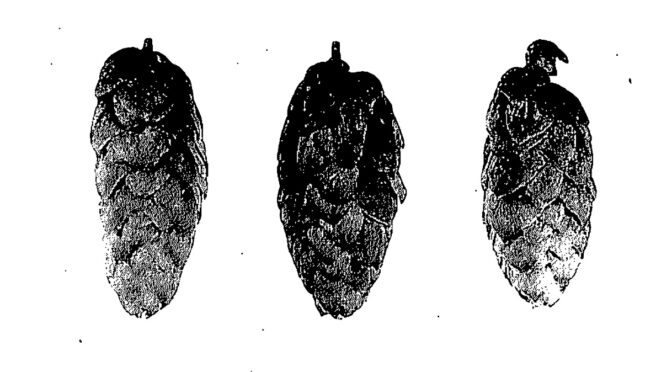
This English hop variety was Malling, which originated in England, and is still grown in Austria nowadays. In fact, it’s the only country where it’s still grown. In 2024, I identified Malling with Malling Mid-Season, but now I’m not so sure anymore where I got that information from or whether it was an educated guess on my end. Malling Mid-Season would make sense, as the variety was trialed in England in the 1940s, and was found to be unharmed by mosaic disease, and resistant to downy mildew.
Further evidence that Austrian Malling might be Malling Mid-Season can be traced from analytical data: in 1943, when first data about Malling Midseason (as it was spelled in that publication) was published, the minimum and maximum alpha acid content were 6.35% (1934) and 8.86% (1939), respectively. The other hop varieties published in the same year were Brewer’s Stand-by and College Cluster. The former had an alpha acid content between 6.88% and 11.2%, while the latter’s alpha acid was lower, in a range of 6.18% to 7.24%. These two varieties were also unharmed by mosaic disease and resistant to downy mildew.
The Upper Austrian Hop Growers Cooperative nowadays specifies Malling hops to have an alpha acid content between 6.5% and 9%, which most closely matches the alpha acid range of Malling Midseason. As I mentioned earlier, the hop variety selected in the Upper Austrian hop trials was specifically mentioned as being disease-resistant, so if the chosen variety was one of these three new English varieties released in 1943, it most likely would have been Malling Midseason.
Another piece of evidence is the name: in the first half of the 20th century, a number of new hop varieties were bred in England, with names like “Brewer’s Gold”, “Bullion Hop”, “Pride of Kent”, “Nonsuch Hop”, “Brewer’s Favourite” and “Early Promise”. Of all these hop varieties, Malling Midseason is the only one that makes any reference to Malling.
I also inquired with the Upper Austrian Hop Growers Cooperative whether they have any historic documents regarding the origin of Austrian Malling hops, but haven’t received any answer.
Obviously, hop growing in Upper Austria is still ongoing, and while it’s just a fairly small trade, it has grown since the 1950s: 38 farms across Mühlviertel and the neighbouring Waldviertel in Lower Austria with a total acreage of 173 ha are organised in the hop growing cooperative, and produce around 300 tons of hops, spread across 15 varieties. This still doesn’t nearly cover the Austrian brewing industry’s demand.