
I’m currently in the process of writing my next book (which is the main reason why I haven’t posted anything in the last few months), and as part of that, I was brewing a few trial batches. Most recently, I was brewing a historic recipe that involved 100% pale wheat malt.
The problem with such a mash is that wheat has no husks, unlike barley. These husks help loosen up the mash during lautering and sparging, when the liquid portion, the wort, is separated from the solid portion of the mash. In some way, barley malt is “self-filtering”, but alas, wheat malt isn’t.
And yet historic brewing literature mentions some beers that were brewed from 100% wheat malt. The most prominent one that is still around is Piwo Grodziskie, brewed from 100% oak-smoked wheat malt. So how did brewers do it back in the day?
One way was to use a special lauter tun that allowed brewers from lauter “from the top”. The lauter tun basically had a vertical row of taps installed on the side, so depending how much of the liquid had been drained, the topmost tap could be opened, then the one underneath, etc., so that all wort could be drained without the mash compacting to prevent the drainage of the remaining wort.
Another way was to use a lautering aid that loosens up the mash enough to prevent a “stuck sparge”. Nowadays, some brewers use rice hulls (I’ve seen this in a commercial brewery where rice hulls were added to the lauter tun for a wheat beer recipe with 80% wheat malt), and that works quite well. But historically, another popular aid was straw and you find the occasional references to it in historic literature. So that’s what I tried.
I followed the mash protocol as described in the historic recipe. On the side, I took wheat straw (you can buy fairly clean straw in pet stores, just don’t buy hay) and soaked it in hot water. I then drained the water, and soaked it again. I repeated these steps a few times and then rinsed off the straw until the water ran off completely clear.
In my lauter tun (really just a bucket with a false bottom) I added some straw on top of the false bottom. When it came to moving the mash from the mash tun to the lauter tun, I layered mash and more straw repeatedly, and then started lautering. And… it worked without any problems whatsoever. I was able to lauter at my regular run-off speed, it didn’t get stuck once, and I had no efficiency issues. On the contrary, I even ended up 0.2°P higher than expected on my wort’s OG at the very end of the process.
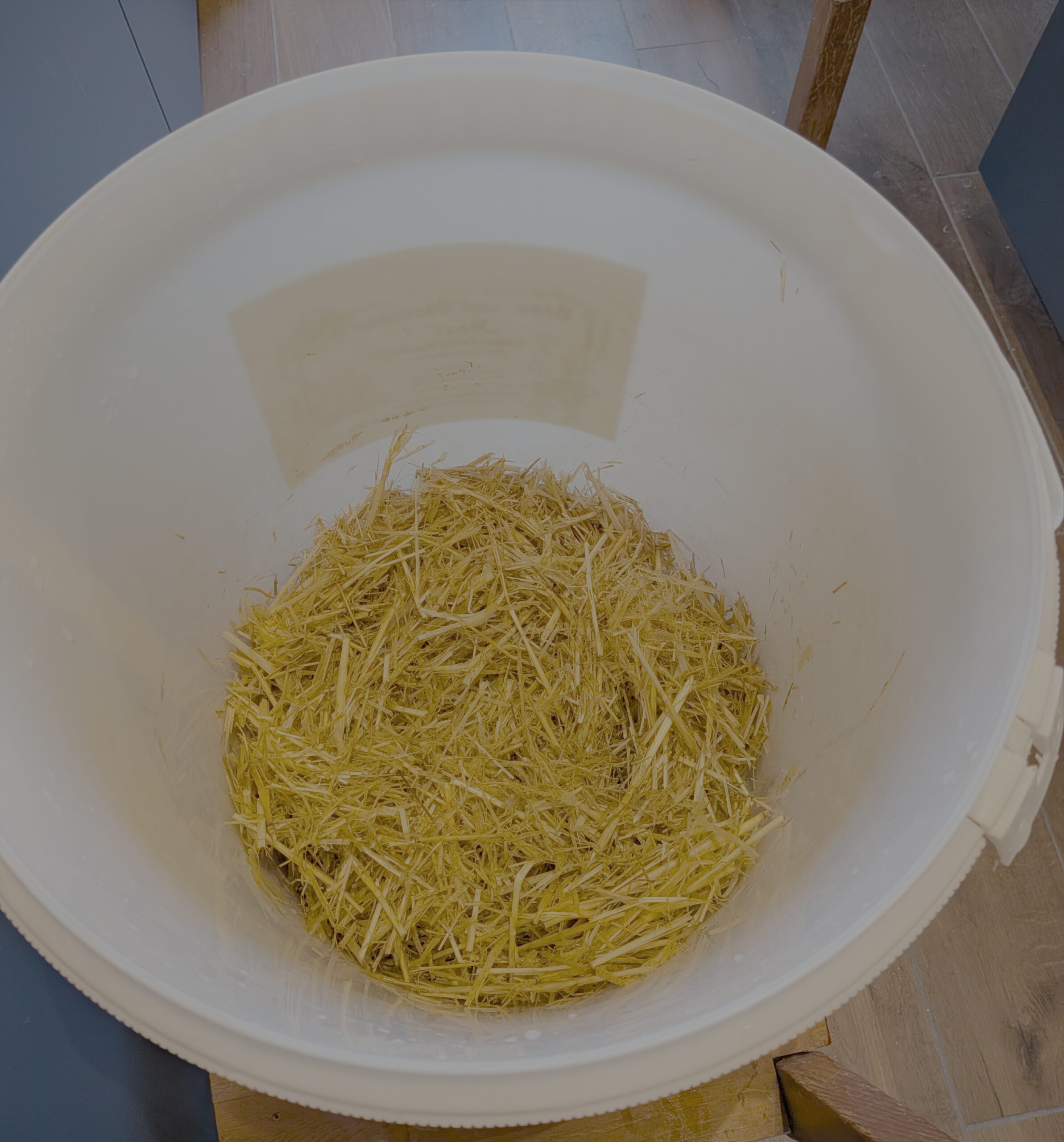
While I wouldn’t do this with every mash, it’s certainly worth a try for a historic 100% wheat malt mash. Just make sure to soak and rinse the straw really well, as you don’t want any straw flavour in your beer (unless that’s what you’re specifically going for).
Also, if you want to guess what my next book will be about, leave a comment with what you think the topic will be, and I will give the correct guesses an honourable mention once I reveal/pre-announce the book in the next few weeks or months.
Wheat beer?
Weizenbier 🙂
Double dry-hopped hazy IPAs.
There will be a hazy IPA recipe in the book! But it’s somewhat of a curve ball.
Berliner Weisse
This is perhaps not as much of a mystery as it seems to us in modern times.
It’s relatively recently that very fine metal mesh or perforated metal sheets to make a false bottom in the lauter tun were widely available. Before that people were using a wooden false bottom and the larger holes in that would inevitably let some grain through. That’s a disaster because it blocks your tap and you can’t run your wort off. So brewers would often have supplemented the false bottom with a layer of straw anyway, even when brewing with barley.
Polish beer styles
Beers non-compliant with the Reinheitsgebot?
Hey Andreas, thanks, very interesting (and inspiring)! Do you think this technique might also work with 100 % rye?
Hard to say without trying. I never brewed with rye malt, but from what I understand, the issue with rye is the beta glucans on top of the lack of husks. Maybe, when with an extended beta glucanase rest? That’s just a guess.