Tag Archives: festbier

(Some) Beers at the Oktoberfest in the 1960s

This is going to be my last Oktoberfest post for a while, I swear! But I got some good stuff: I stumbled upon Schmankerl Time Machine, a project of Digital Humanities Virtual Laboratory at Munich University from a few years ago to digitise historic restaurant menus from Munich, from 1855 until the 1980s, and make them available online. This of course also contains menus of some of the Oktoberfest tents, which also mentioned beer types, and I quickly wanted to list.

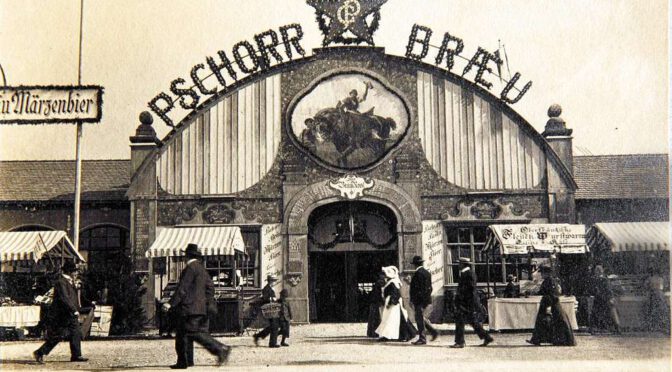
Bräu-Rosl lists all the Pschorr beers on their 1965 menu (Edel-Hell, Export-Dunkel, Märzen, Bock, Stern-Weiße, Animator, St. Hubertus, Pschorr-Malz-Bier), but I don’t think all of those were actually sold there. The menu does have two beer names at the very top, though, Bräurosl-Wiesn-Märzen and Pschorr-Edel-Hell, so I assume that’s what was actually served. Hacker-Pschorr (in 1965, Hacker and Pschorr hadn’t merged yet) nowadays still serve an Edel-Hell from wooden cask at some of their beer halls.

The menu the same year at Fischer Vroni contains lots of advertising , including one for Augustiner Brauerei, listing some of the beers: Export-Bier dunkel, Edelstoff hell, heller Augustiner-Bock, St. Augustin-Maximator, and Oktoberfest-Märzenbier. Augustiner was served at the Augustiner Festhalle and Fischer Vroni, but it’s not clear which exact beers. So this did not give us much insight beyond the general Augustiner portfolio at the time.

Hippodrom in turn had two beers on their menu: Spatenbräu helles Wiesenbier, and Spatenbräu Champagner Weißbier. The latter would nowadays be called Kristallweizen, but this was 1965, before PGI and PDO, around the time when French winemakers only started complaining about the misuse of what they thought exclusively described sparkling wine from the Champagne region.

Hofbräuhaus only started participating at Oktoberfest in 1955. Ten years later, they served two beers: helles Festbier and Wies’n Märzen.

Löwenbräu served two beers in 1961: Wies’n Märzen and Export hell. They also have a bold warning text on their menu that if your Maß was under-poured, you’re kindly asked to have it properly filled up to the line. I’m not sure that would have been exactly popular with the waitresses.

Ochsen Braterei in 1965 unfortunately only had the logos of two brands on their menu, Paulaner and Thomasbräu, but in reality both of them were brewed by the same brewery. So maybe they had beers of both brands? I can’t say for sure.

Winzerer Fähndl, also known as the Paulaner-Thomasbräu-Festhalle, made this a bit clearer: they at least mention concrete beers next to both brands’ logos, namely Paulaner Märzen and Thomasbräu Hell-Urtyp.

And that’s it. Far from all the breweries or tents at Oktoberfest at the time, but we still see a general trend: a lot of them served more than just one beer, quite often both a Märzen and a Helles Export or Festbier. In the case of Hippodrom, wheat beer was also served. All very different from Oktoberfest nowadays.

Oktoberfest Beer at Oktoberfest: Does the Difference Even Matter?

Working for a Munich-based startup (though in my case, remotely from Berlin) comes with a few perks. One, travelling to Munich a few times a year for work, two, going to Oktoberfest with my work colleagues because that’s apparently what any respectable Munich company is meant to do.

2025 has been my third Oktoberfest in a row now, each year in a different tent serving a different beer brand, in particular Marstall Zelt (Spaten), Augustiner Festhalle (Augustiner) and Schützen-Festzelt (Löwenbräu). While I don’t have a comprehensive overview over all the beer brands, 3 different beers are still half of them.

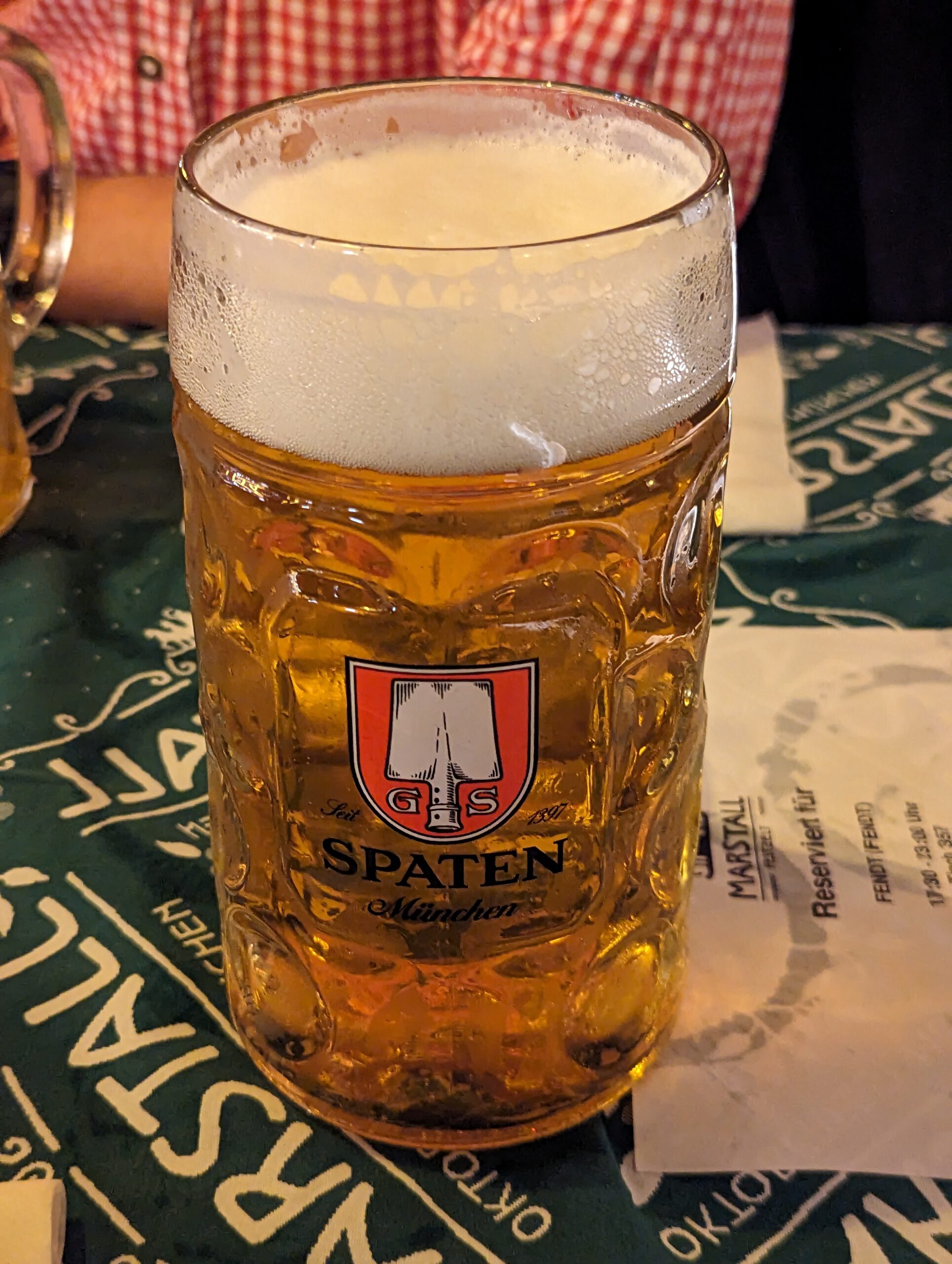
A Maß of Spaten Oktoberfestbier at Marstall Festzelt, 2023

Last year, in the weeks before Oktoberfest, I actually attended a guided Oktoberfest beer tasting, where I was able to try out all six beers (Augustiner, Spaten, Löwenbräu, Paulaner, Hacker-Pschorr, Hofbräuhaus) side by side. In previous years, I did similar taste tests together with my wife Louise and my friend Ben. In these tastings, there were always stark differences, and they weren’t always identical. Two years ago for example, I thought Löwenbräu was fairly good, and ranked it third on my list, while last year, it tasted really bad and I ranked it last. So let’s just say, I have opinions.

Every time I went to Oktoberfest, I had certain expectations about the beer quality, not just connected to my personal prejudice (let’s face it, everyone is somewhat prejudiced about major beer brands) and brand perception, but also informed by previous tastings. But every time, these expectations were shattered.

Spaten at Marstall? Excellent. Cool, fresh, not underpoured, and tasting great.

Augustiner at Augustiner Festhalle? Exactly as I expected and knew it.

Most recently, Löwenbräu at Schützen-Festzelt? Whoa. Fresh, dry, crisp, entirely unlike what I had experienced in previous years.

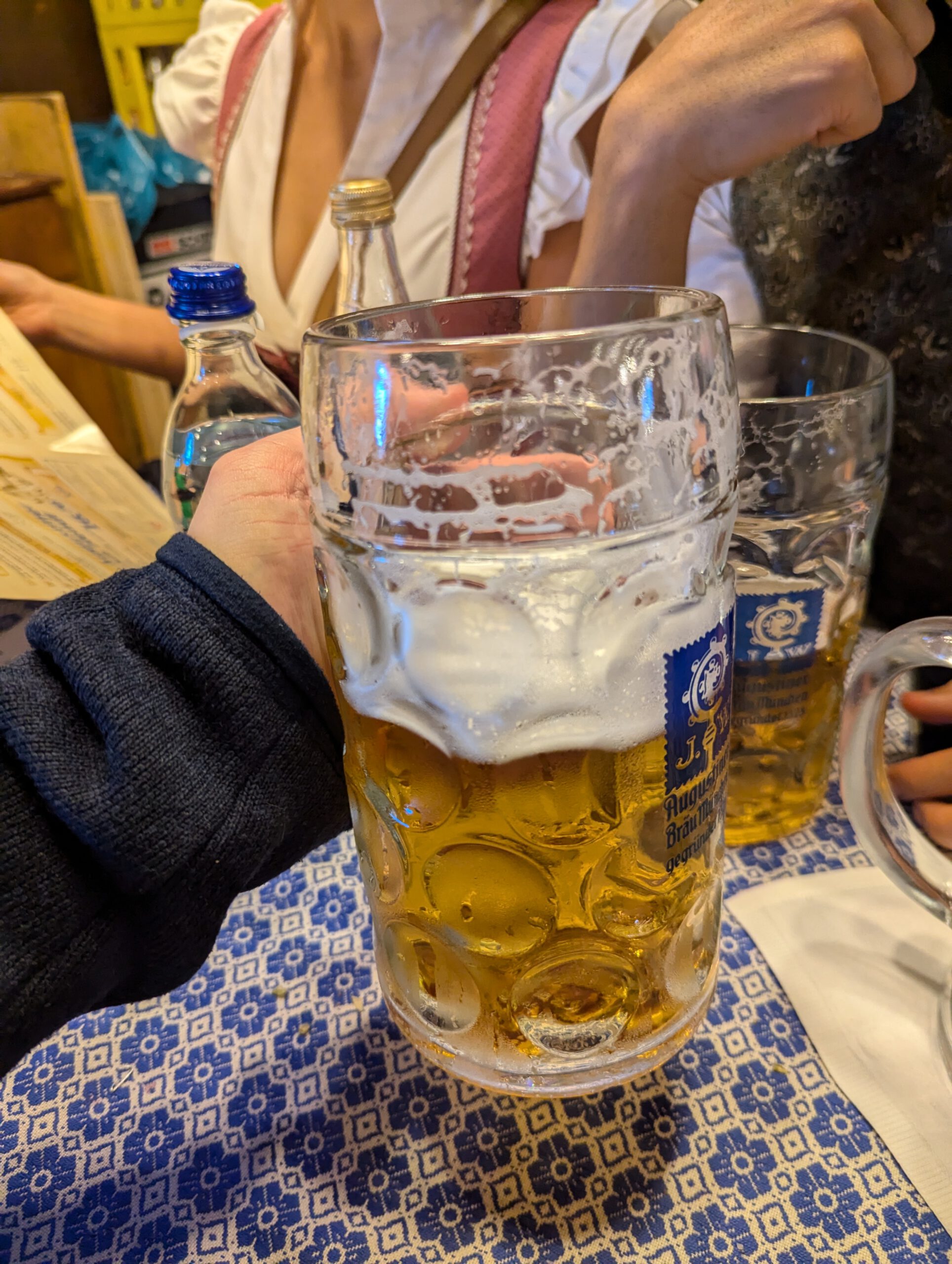
A partially drunk Maß of beer at the Augustiner-Festzelt, 2024

When I came home after Oktoberfest, I actually went back into our beer fridge and tried a can of Löwenbräu Oktoberfestbier. And… it was not the same. It was solid, but nowhere near as good as just a few days before. And it tasted quite different from the Paulaner Oktoberfestbier (also from can) that I had afterwards, and also quite different from the bottled Oktoberfestbier I had had just a few days before.

But thinking back about all the Oktoberfestbier at Oktoberfest over the years, I don’t think I have would been able to distinguish them at all, unlike the ones at the beer tastings. The difference being of course that in all the taste tests, the beers under test were always from bottle or can, while at Oktoberfest, it’s always poured from tap, either as tank beer (for most brands) or from large 200 litre wooden casks (Augustiner only), the taps barely ever close, and the beer is properly cold (which probably doesn’t exactly help with tasting finer details in the beer).

So does the difference in beer at Oktoberfest even matter? To me, it doesn’t seem to, because I honestly don’t think I could taste the difference between Spaten, Löwenbräu and Augustiner. Is the preference of draught Oktoberfest beer at the festival itself just brand loyalty, and has nothing to do with the actual taste? To me, it seems like that at the moment, and it’s not just because people (including me) just get hammered and then nothing else matters. In fact, I never actually got drunk at any of my Oktoberfest visits because I like to pace myself by also drinking Radler and/or alcohol-free beer.

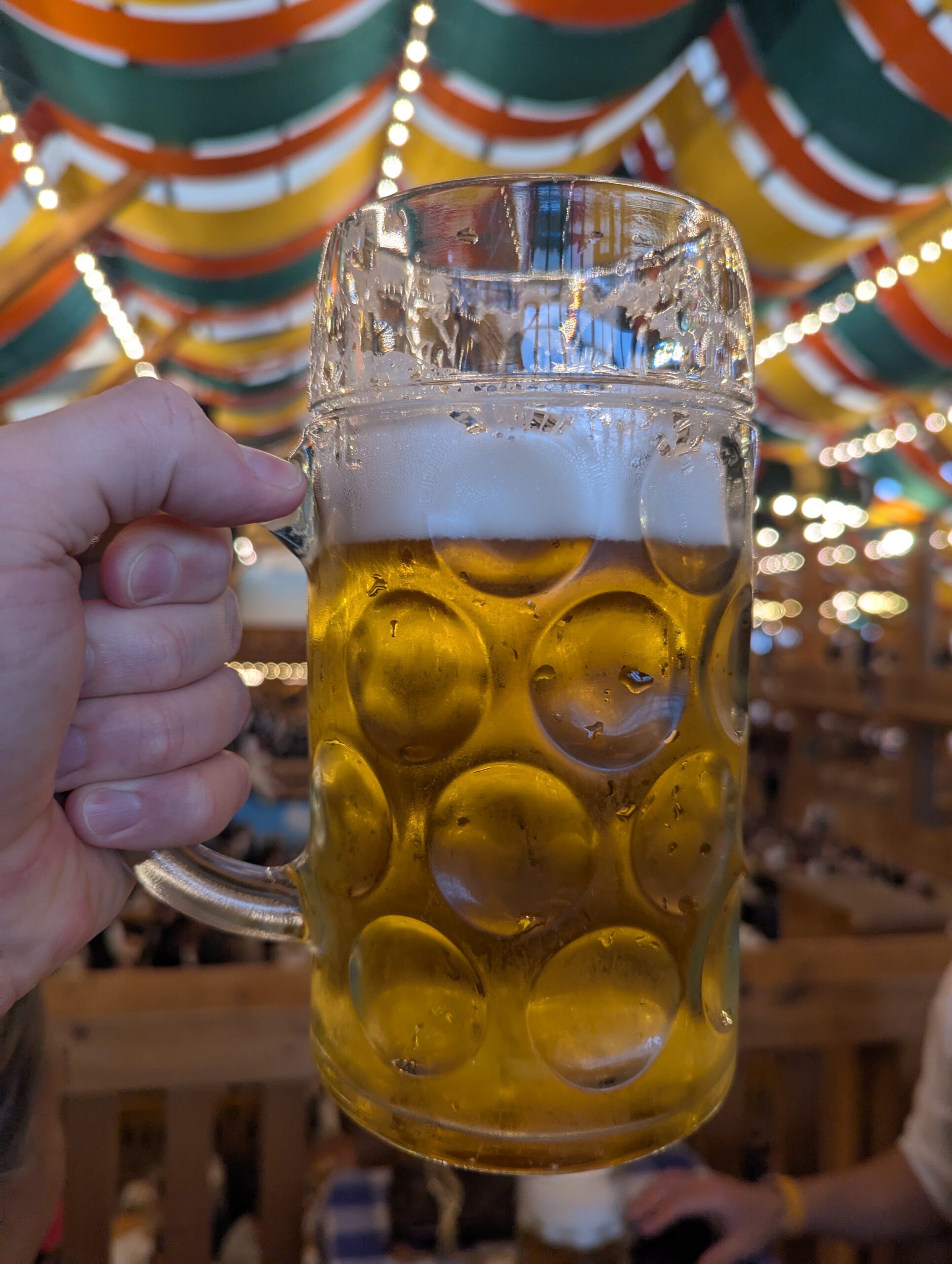
A Maß of Löwenbräu Oktoberfestbier at Schützen-Festzelt, 2025

And the latter is what actually matters in brand differentiation: at Marstall in 2023, they only had Radler as low-alcohol beery option, at Augustiner last year, they had their then new alcohol-free Helles on draught (which is otherwise only available in bottles, even in Augustiner restaurants and beer halls in Munich, so they must have been really sure about shifting a lot without developing microbiological issues in the draught system) which was excellent, and this year, the Schützen-Festzelt only had Löwenbräu’s alcohol-free beer which was a sugary, worty mess that I couldn’t even finish.

So at least for me, while the Oktoberfestbier brand doesn’t seem to matter, it does matter if you want to drink something other than the regular Festbier and explore some of the other options, like the non-alcoholic beers for pacing purposes.

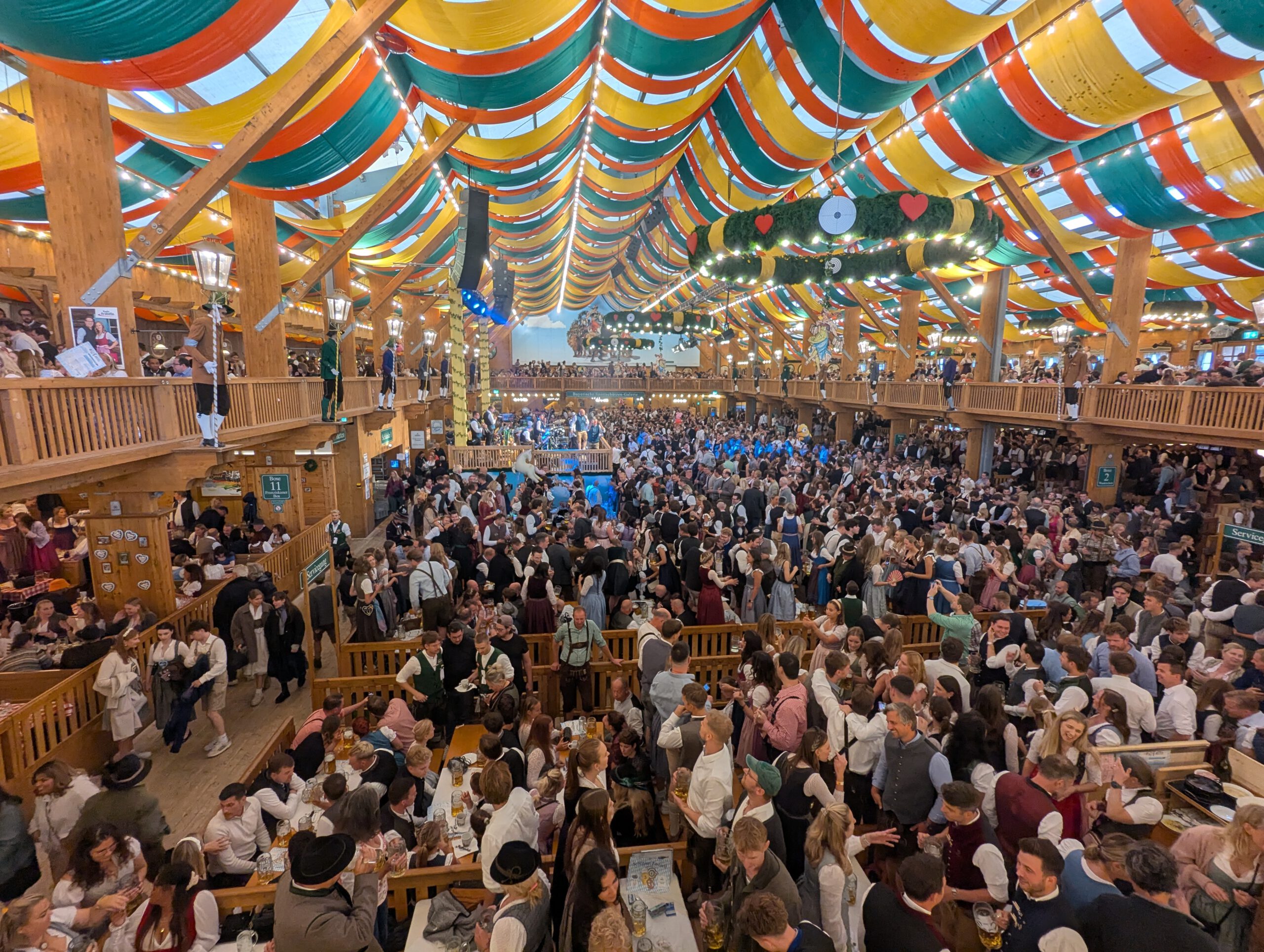
The crowd at Schützen-Festzelt, 2025